Submittal log automation
The automated first pass, step by step, with the screens it produces.
 Book a fit call
Most teams still build the first log by reading the project manual and typing rows. Here is what that costs, and what changes when the first pass arrives drafted.
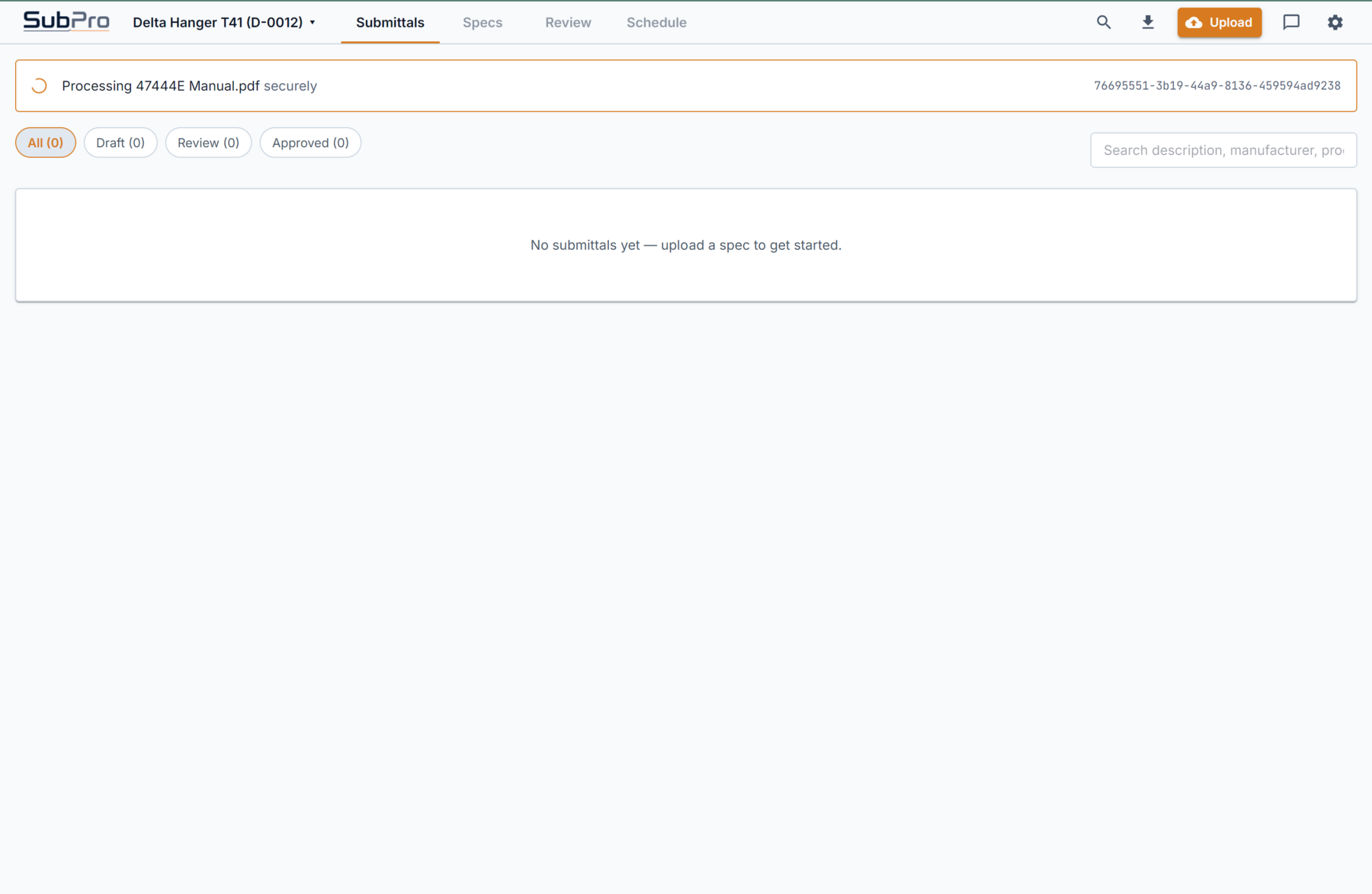
What a project engineer or coordinator does when the log starts from nothing, against what the same person does when the draft arrives first.
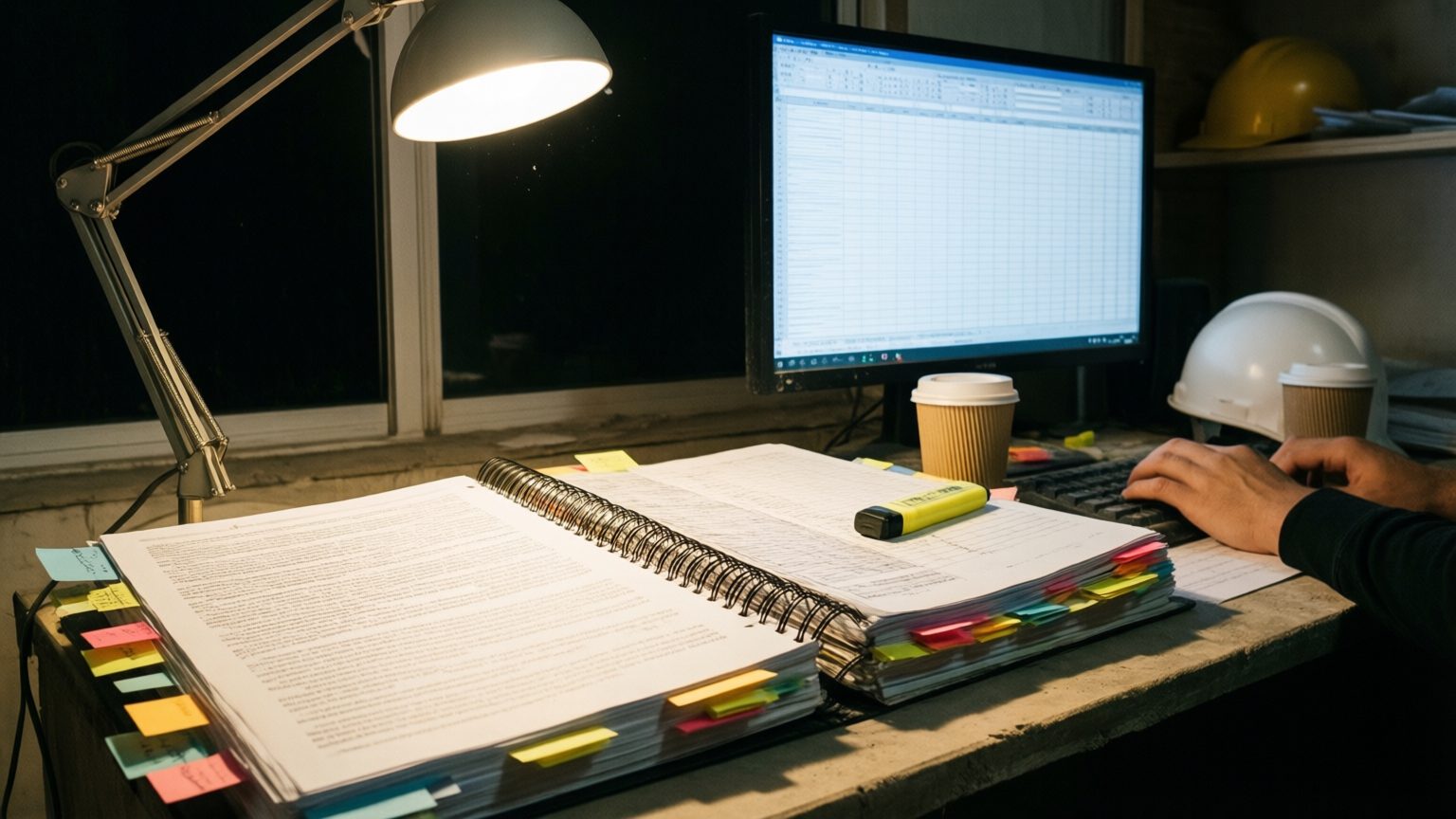
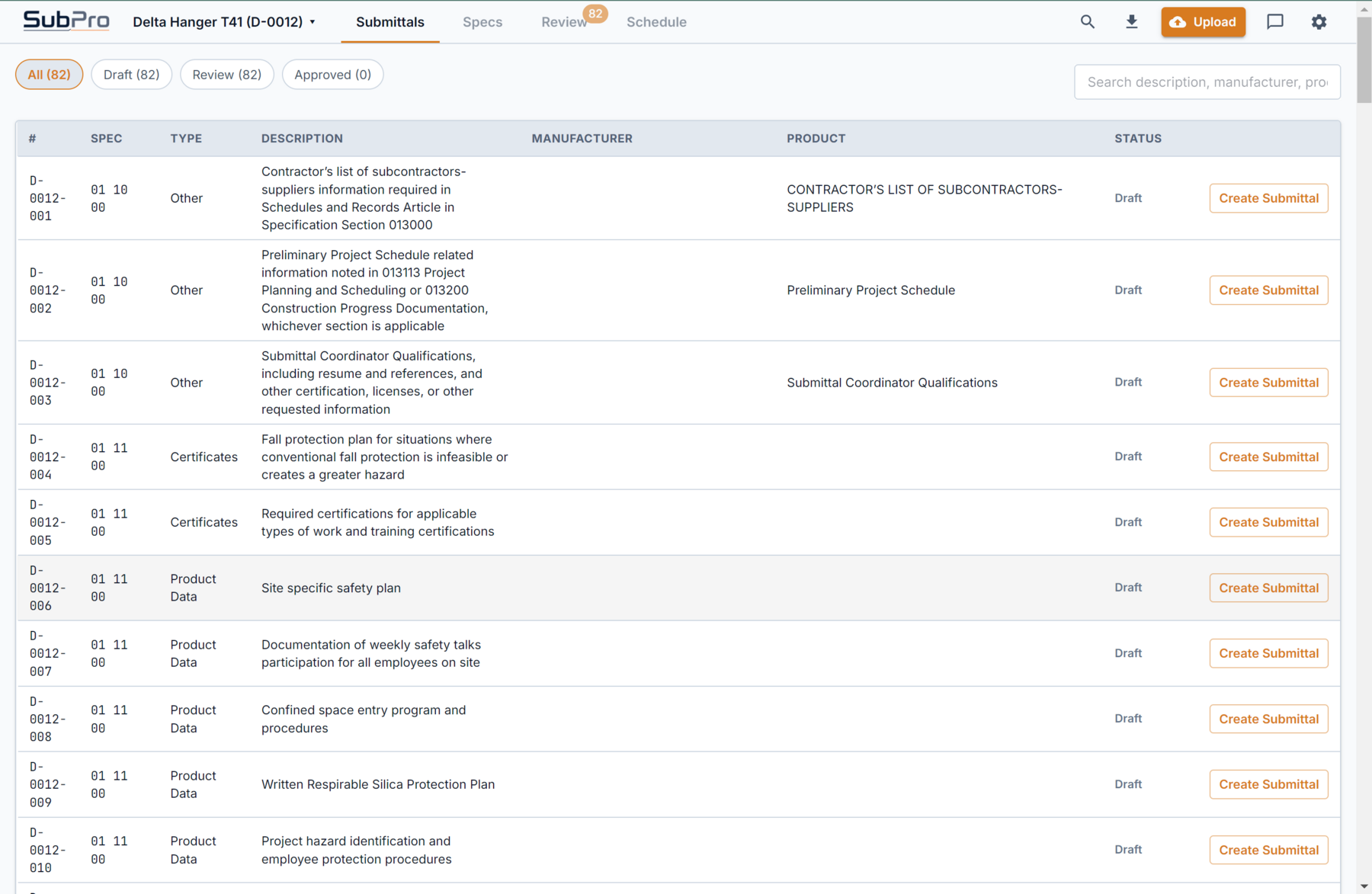
Do the math on a mid-size commercial job: an 850-page project manual holding 60 to 80 spec sections. The figures below are from that job.
| Step | By hand | First pass drafted |
|---|---|---|
| Read each section and find the submittals article | 20 to 40 minutes per section | Machine time you do not sit through |
| Type the rows | A 40-hour week before anyone reviews a requirement | None |
| Capture the source page | Rarely, and never consistently | On every row |
| Review and decide | After the week is gone | 2 to 4 hours, starting the day the draft lands |
| Answer what changed in March | Nobody recorded it | Revision history on the row |

Building the log by hand depends on one person not missing anything across hundreds of pages. Drafting the first pass moves the reading to software and leaves the reviewing and deciding with the team. Neither approach removes a person from the loop. They differ in how much of the week burns before the judgment starts.
SubPro does not promise a perfect extraction. That is the reason the spec page and the review flags sit on every row. A reviewer verifies a row against the source instead of taking it on faith. Requirements, substitutions, conformance, and the final log stay with your team.
The hand-built log has a second cost that surfaces months later: it has no memory. Nobody recorded who changed a row, which revision went to the architect, or what was outstanding when the phase closed. SubPro keeps that history on every submittal without anyone maintaining it, which matters when closeout asks what happened in March. If the GC runs approvals on their own system, the editable exports carry that record into it. The lifecycle page covers the handoff.
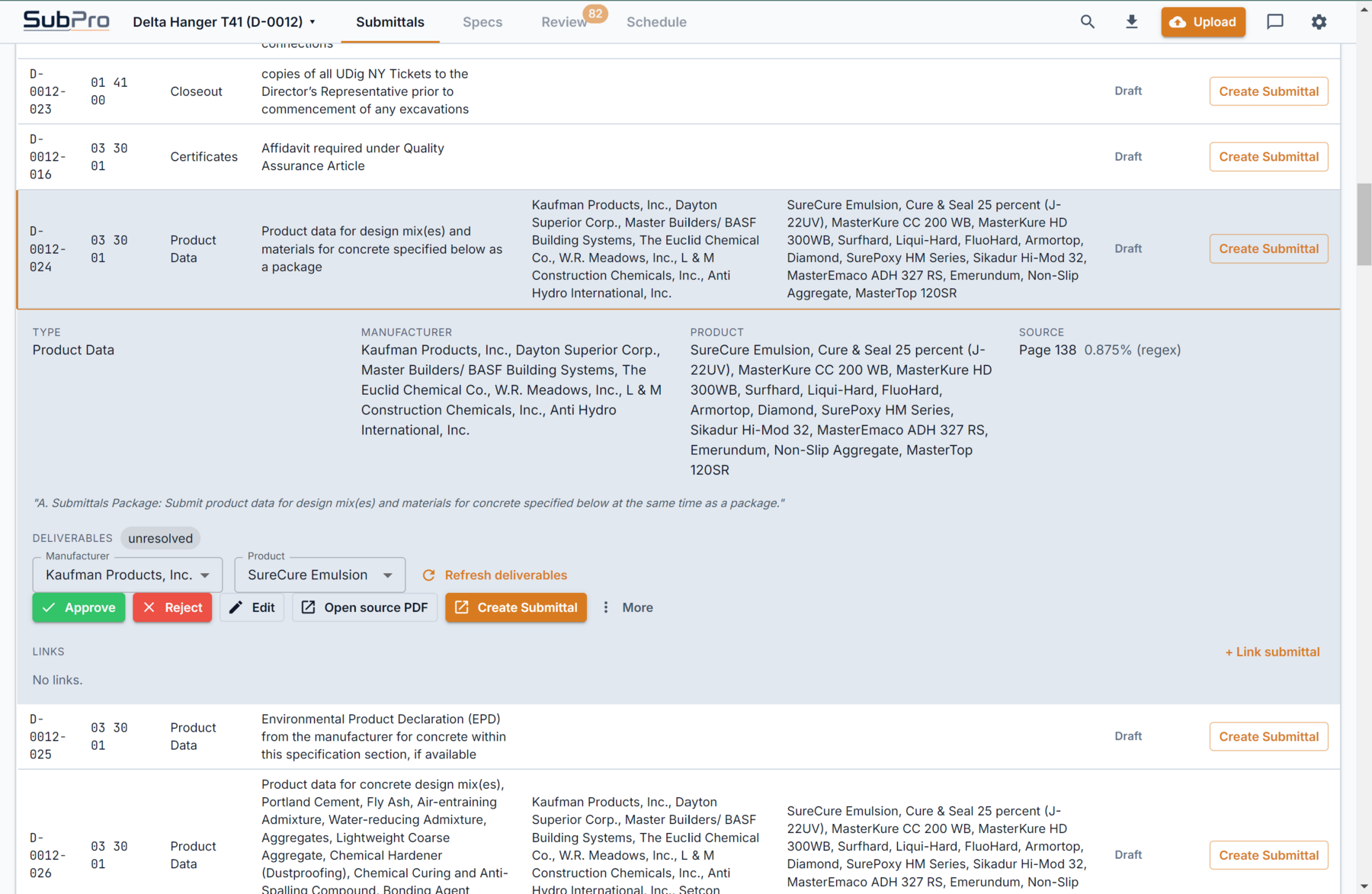
The automated first pass, step by step, with the screens it produces.
Everything SubPro does once the first pass is drafted, through closeout.
Short answers to the questions this comparison tends to raise.
The first pass through a project manual is slow, repetitive, and easy to get wrong, which is the kind of work worth handing to software. Drafting the log that way frees the team to review and decide instead of transcribe. The judgment still belongs to a person.
A missed requirement. A submittals article buried deep in a section is easy to skip. A skipped row becomes a submittal nobody chased until the material was late. Hand-built logs also lose the source page, so rows are hard to verify later.
No. Software handles the reading and drafting. A person still reviews the rows, confirms requirements, handles substitutions, and owns the final log. SubPro keeps the spec page and the flags on every row so that review goes quickly.
SubPro builds the log and keeps the record: status, revisions, and what went out, item by item. If the GC runs approvals on their own system, the editable exports carry your record into it instead of starting over. The lifecycle page covers that handoff.
Time the two approaches on your own project manual. You get the drafted log back with its citations and decide from there.