Submittal log software
The log these files come from, and how it stays editable.
 Book a fit call
This is the output. The same for every project: the submittal log, the submittal schedule, the submittal packages.
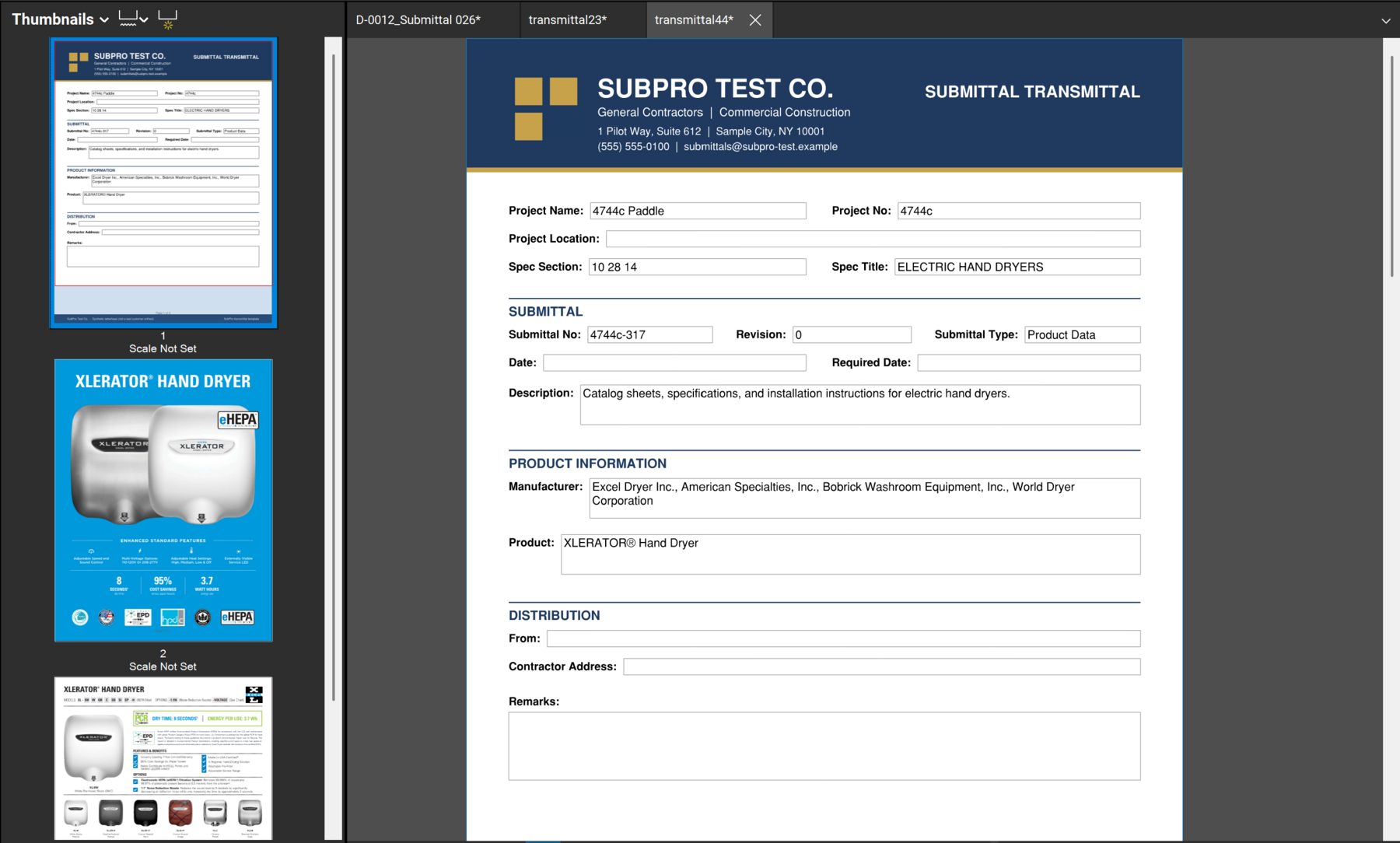
One row per requirement, numbered under your project number, in the columns you already expect.
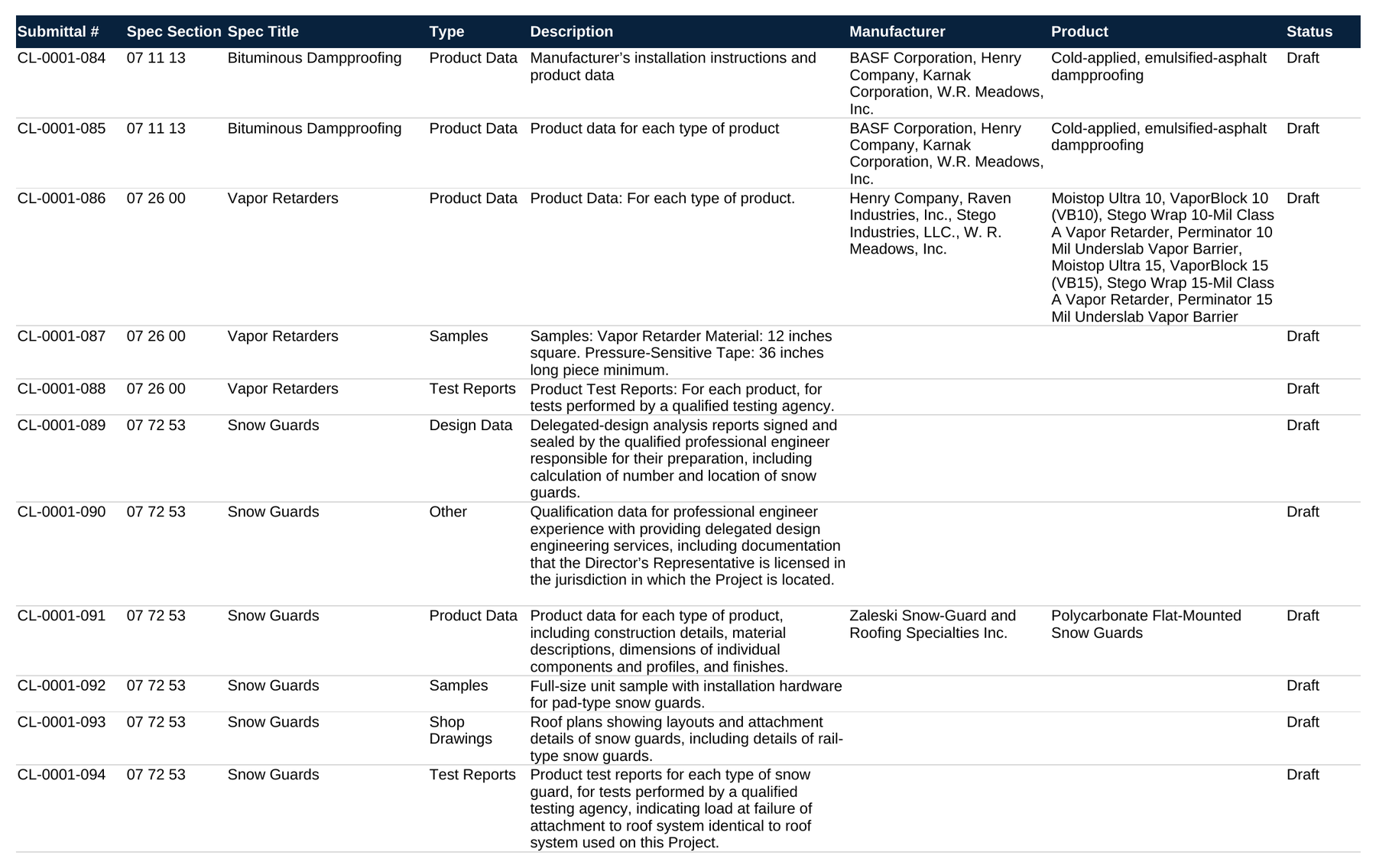
The project name sits in the title band and every row is numbered under your project number, so the file drops into your workflow without a rename pass.
When Section 08 71 00 calls out Hager hinges and Von Duprin exit devices, the row says so.
Responsible party, due date, submitted date, approved date, and revision columns are there from day one. The file is a plain spreadsheet, so your team edits it freely.
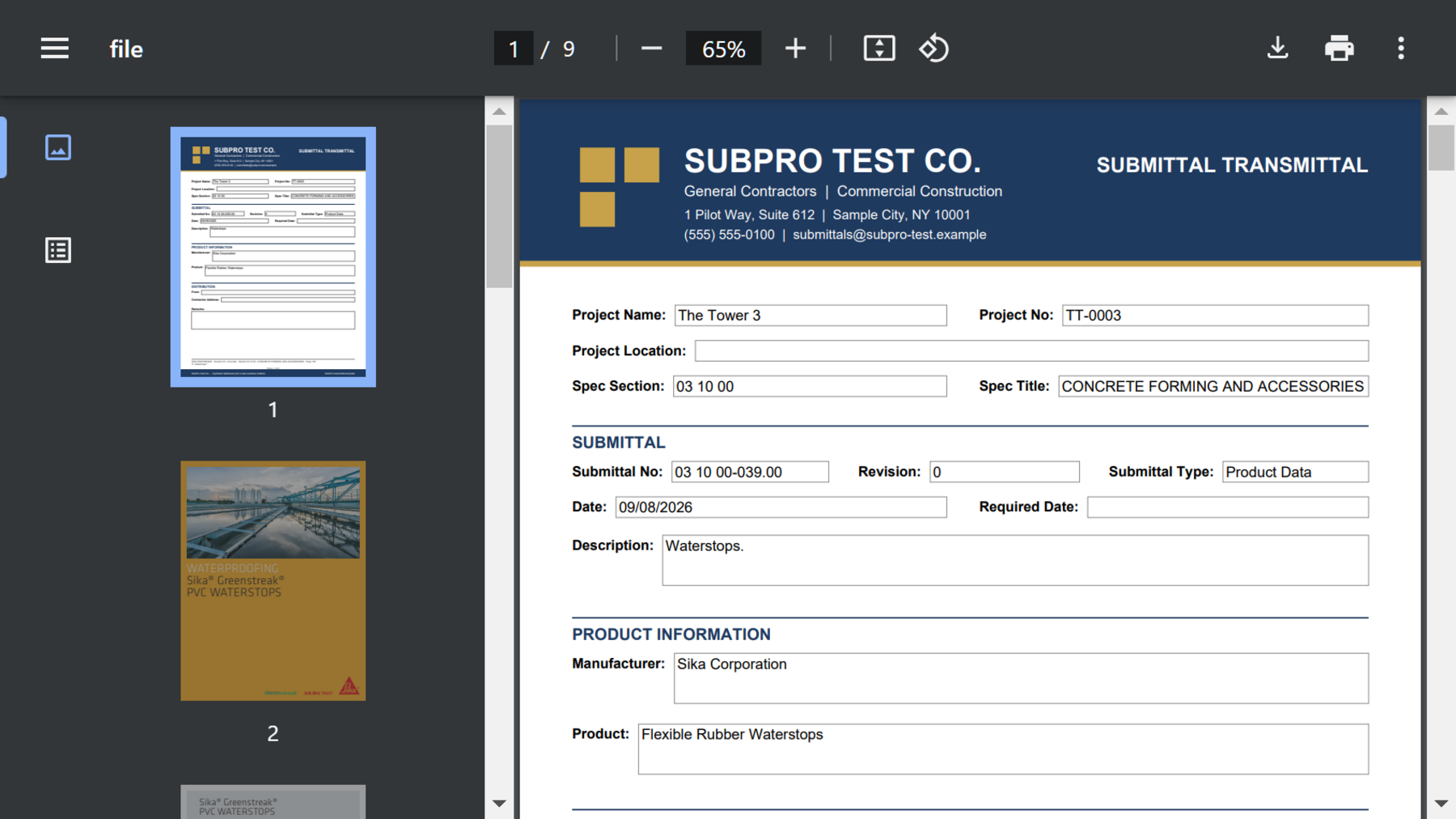
These sample package views show SubPro organizing transmittal details, product documentation, and PDF package context for review before handoff.
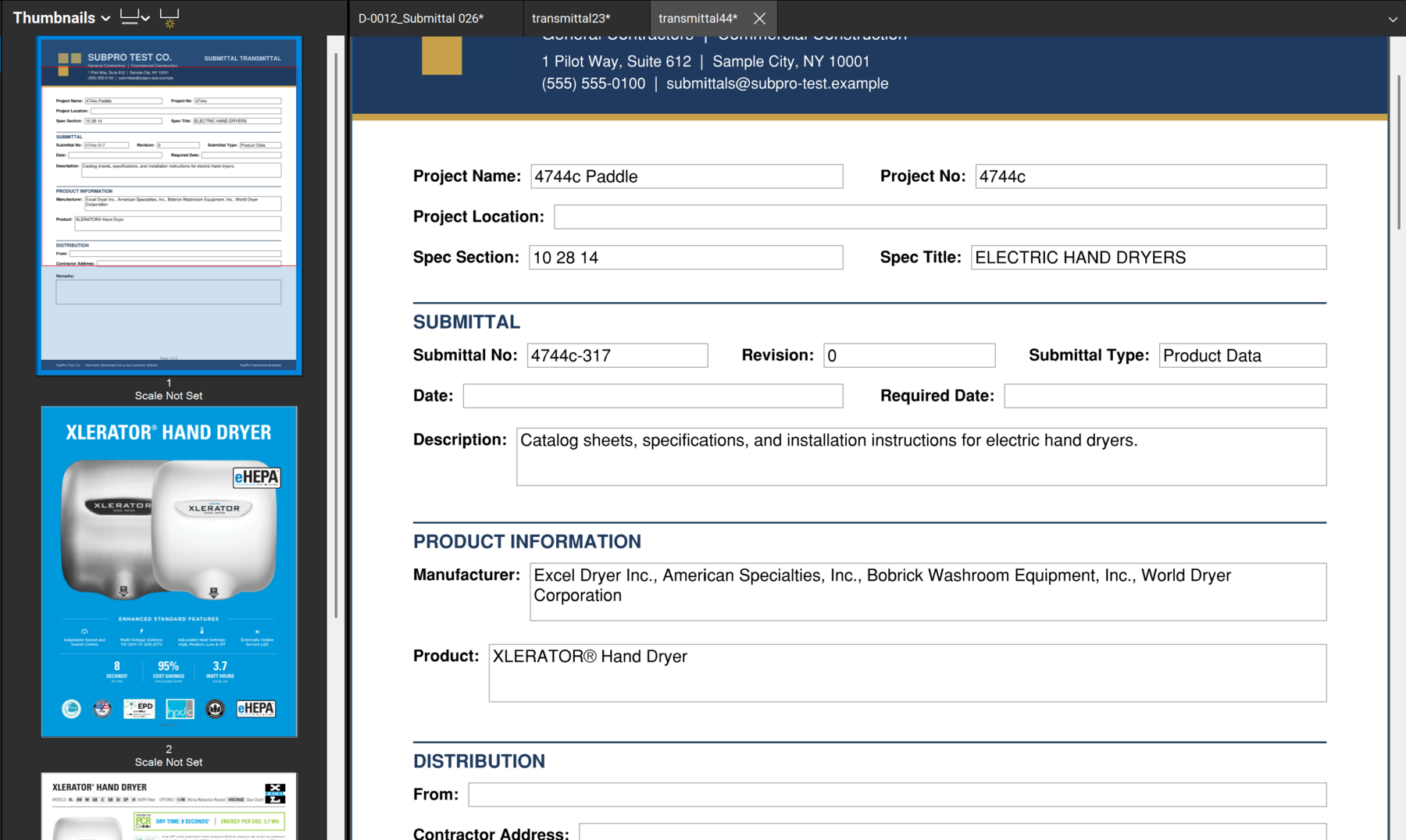
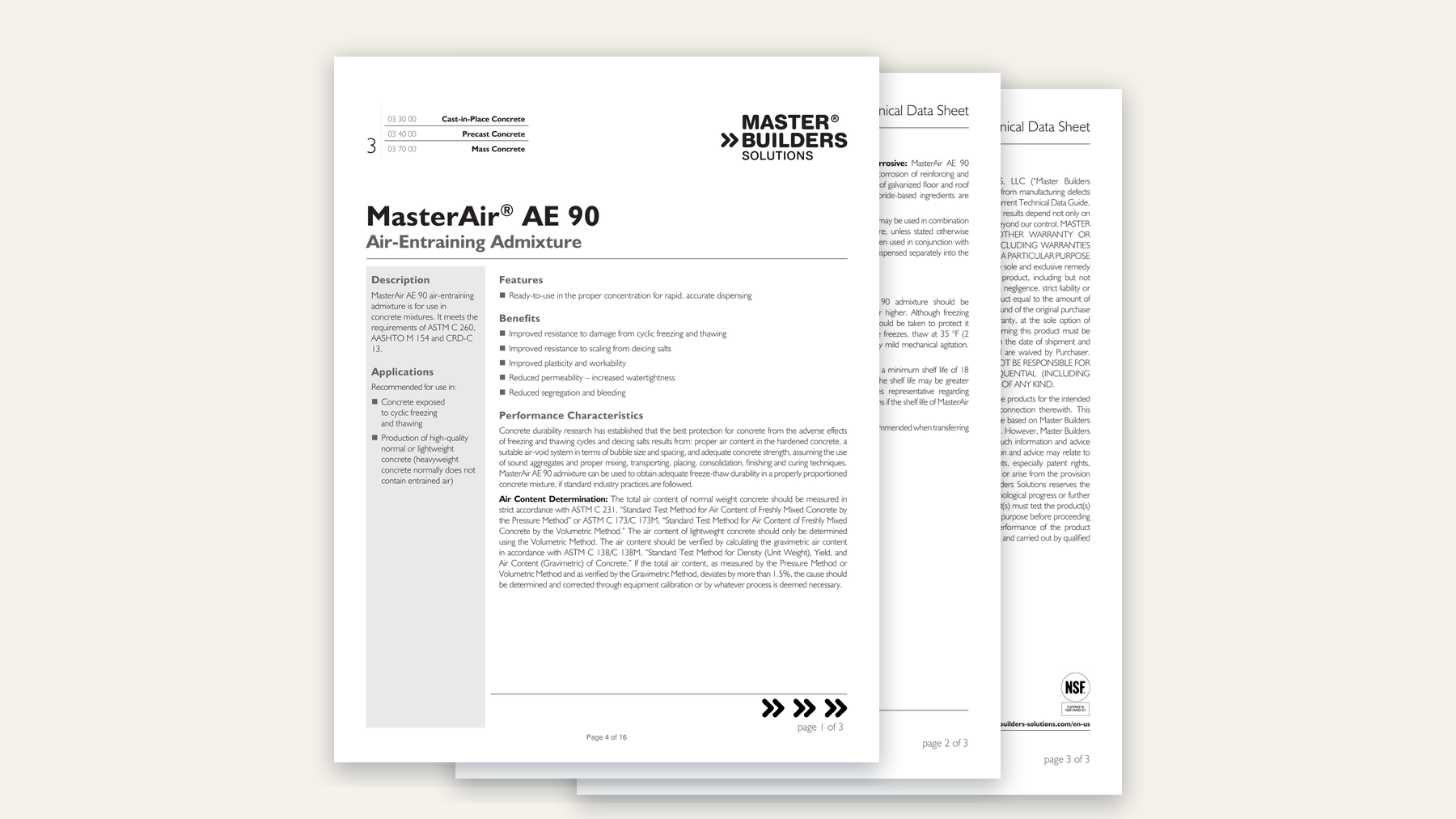
The rows the build was least sure about, with the reason each one needs your eyes.

A silicone joint sealant the book describes loosely, a door hardware schedule cross-check in an unusual section: each one is listed with its spec section and the reason it was flagged. On a Reviewed Build or a pilot, these rows come back worked by a construction PM, not just listed.
Five files, each with one job.
The working register. One row per requirement with its spec section, type, description, manufacturer and product where named, status, and the page that called for it. This is the file your PM reviews first.
The same rows arranged by timing: what is due, when it has to move, and who owns it. Long-lead items surface here before they hold up the job.
One PDF per submittal, named and numbered to match its log row. Transmittal first, product data behind it. Where product data is not yet available for a row, the row stays in the log with a flag instead of shipping as an empty shell.
The first page of every submittal package, filled from the log: project, spec section and title, submittal number, revision, type, description, manufacturer, product, and distribution. Remarks stay blank for your reviewer.
Every row that needs a decision before it is sent, with the reason. Substitutions, unusual sections, and requirements the book states loosely all land here. Your PM works this sheet, then the set is ready.
How the files above get built, page by page.
The log these files come from, and how it stays editable.
Status and revisions on every item until closeout signs off.
The review gates each file clears before it reaches you.
The assembled PDF submittal packages, the submittal schedule and the submittal log in Excel, with every row still carrying its source page and flags. Before a pilot starts you get the deliverable list in writing, down to the file names.
The log is the working register: one row per requirement with its spec page and status. The schedule arranges those rows by timing. The log answers what is required, the schedule answers when it has to move.
Requirements, product fit, substitutions, conformance with the contract documents, schedule decisions, and every flagged row. SubPro prepares the files. Your team confirms them before anything is sent.
The project specifications and project manuals you send, the product data available for your scope, and the review expectations you set on the fit call.
One fit call, one of your project manuals, and this same set of files comes back for you to judge.