A log you can defend
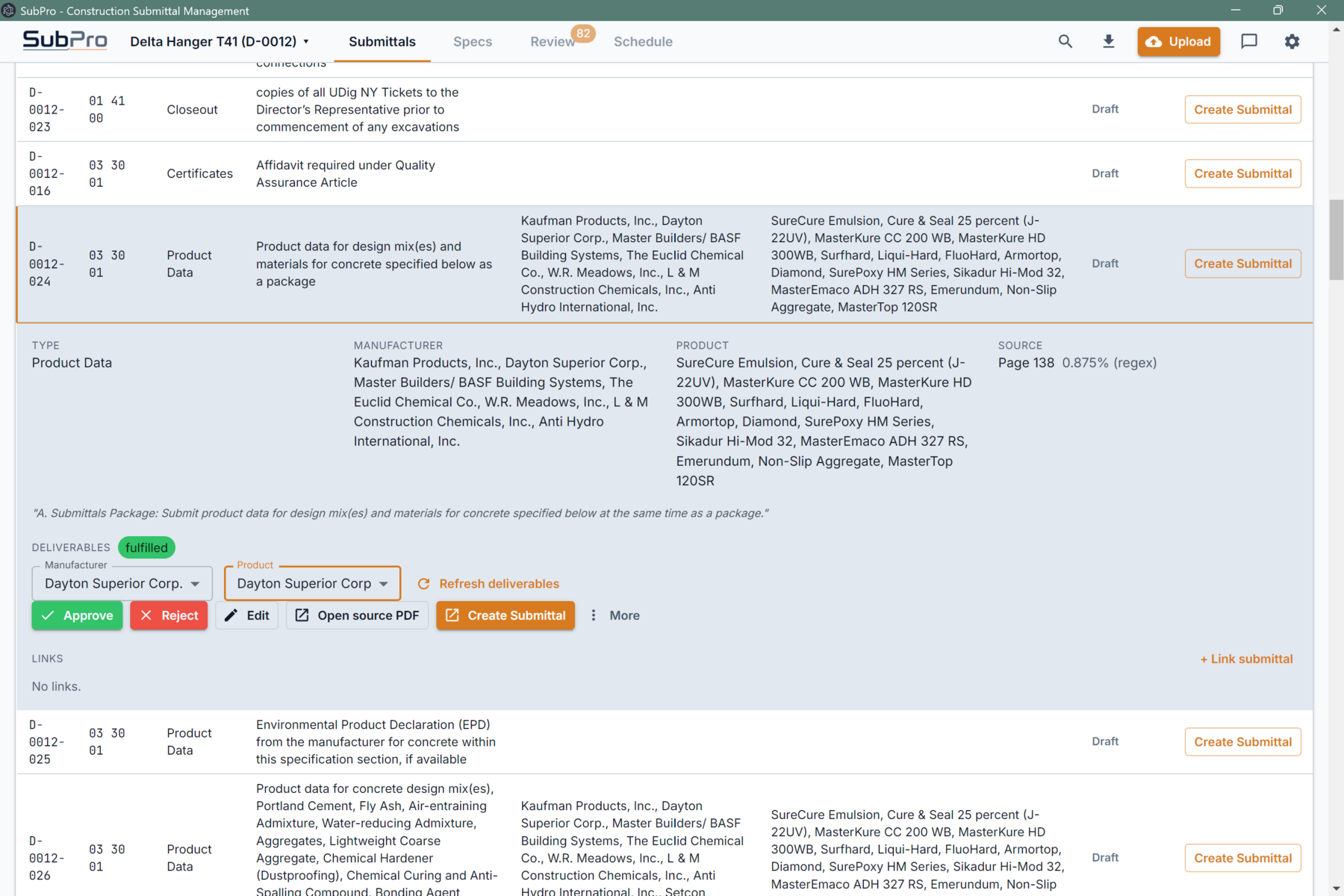
Rows arrive with their spec pages attached, so wrong rows die at a desk.
 Book a fit call
SubPro reads the spec book, drafts the cited log, and gathers the package evidence behind each row. What lands on the reviewer's desk is checkable on arrival.
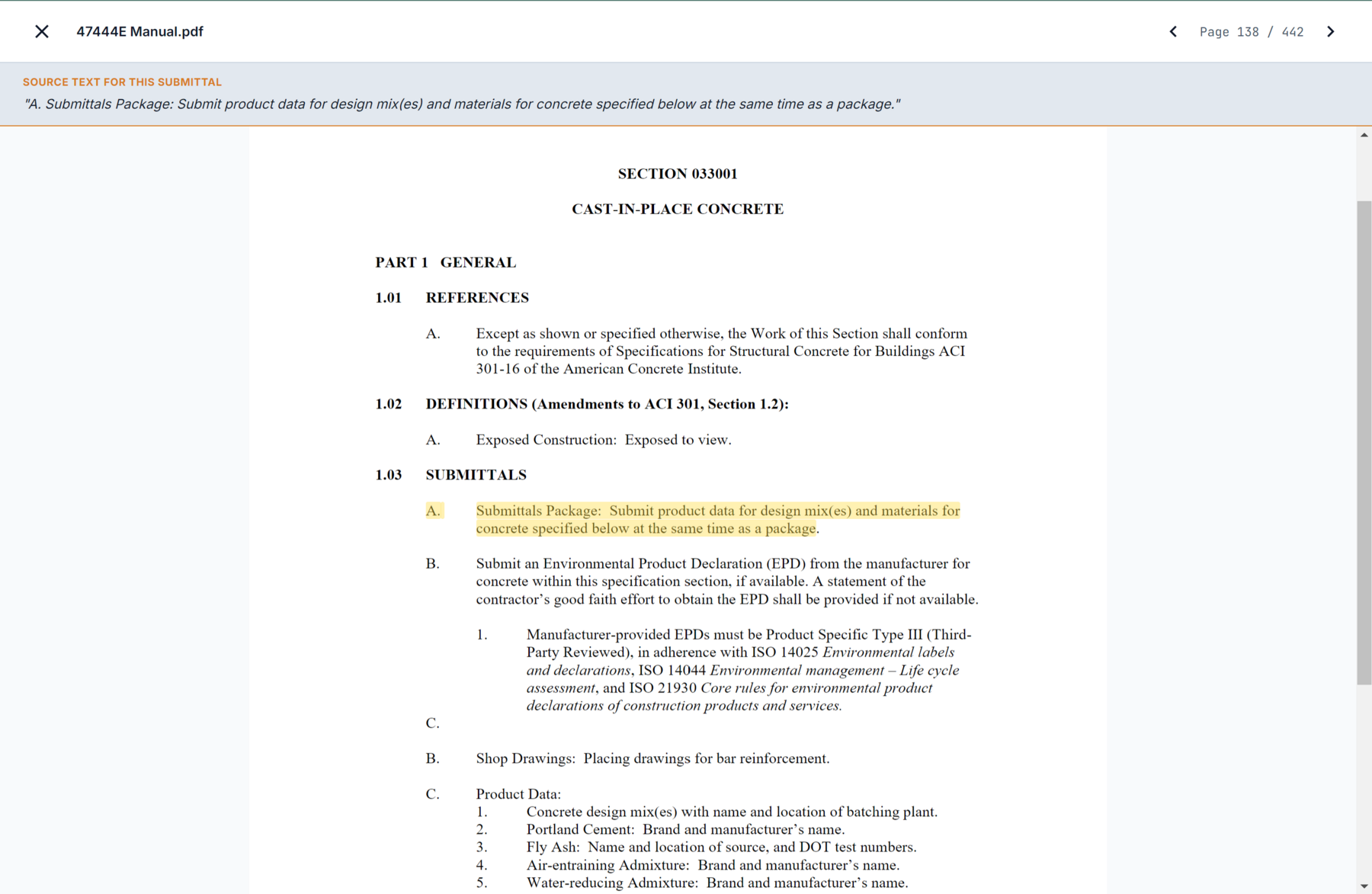
On a commercial job the project manual runs hundreds of pages across dozens of sections. Someone reads it line by line and types rows. Call it 30 pages an hour and 40 rows a day between phone calls. An 850-page manual with 500 requirements is a week of one person's full attention.
One skipped paragraph on page 214 becomes a missed submittal that surfaces after the material is on order. SubPro takes the reading, the drafting, and the evidence gathering. The judgment stays with your team.
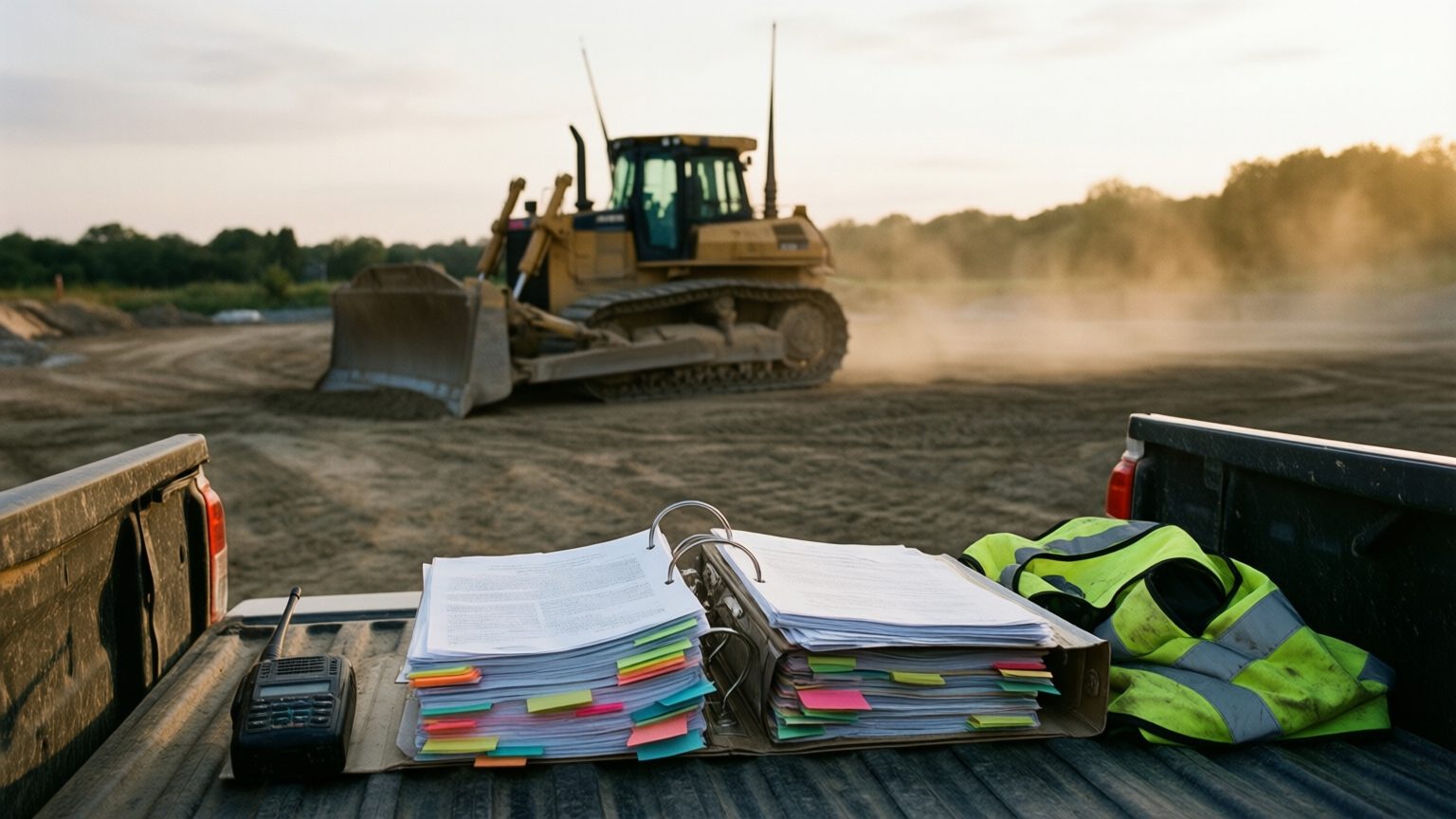
Rows arrive with their spec pages attached, so wrong rows die at a desk.
Ask the spec book a question in chat and the page comes back with the reply.
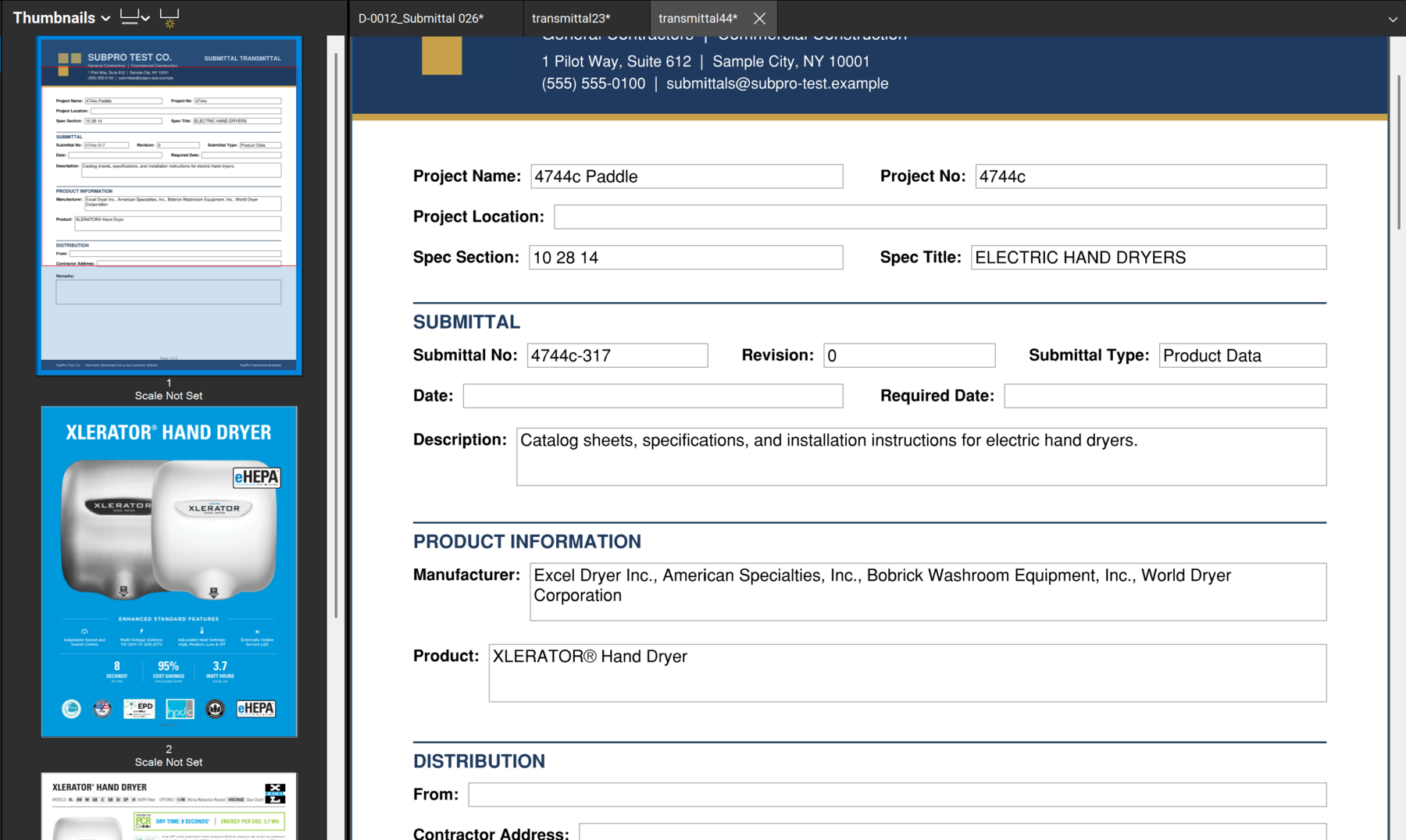
Product data stacks behind the cover sheet. Merging PDFs becomes a read-through.
Status, revision, and transmittal history accrue on every item. Closeout becomes a lookup.
The arithmetic of hand-building against reviewing a draft, run honestly.
Over 11,000 manufacturer documents across more than 800 indexed manufacturers, the source kept on every entry.
Take Section 07 92 00 Joint Sealants. It appears on almost every commercial job and hides more obligations than its page count suggests.
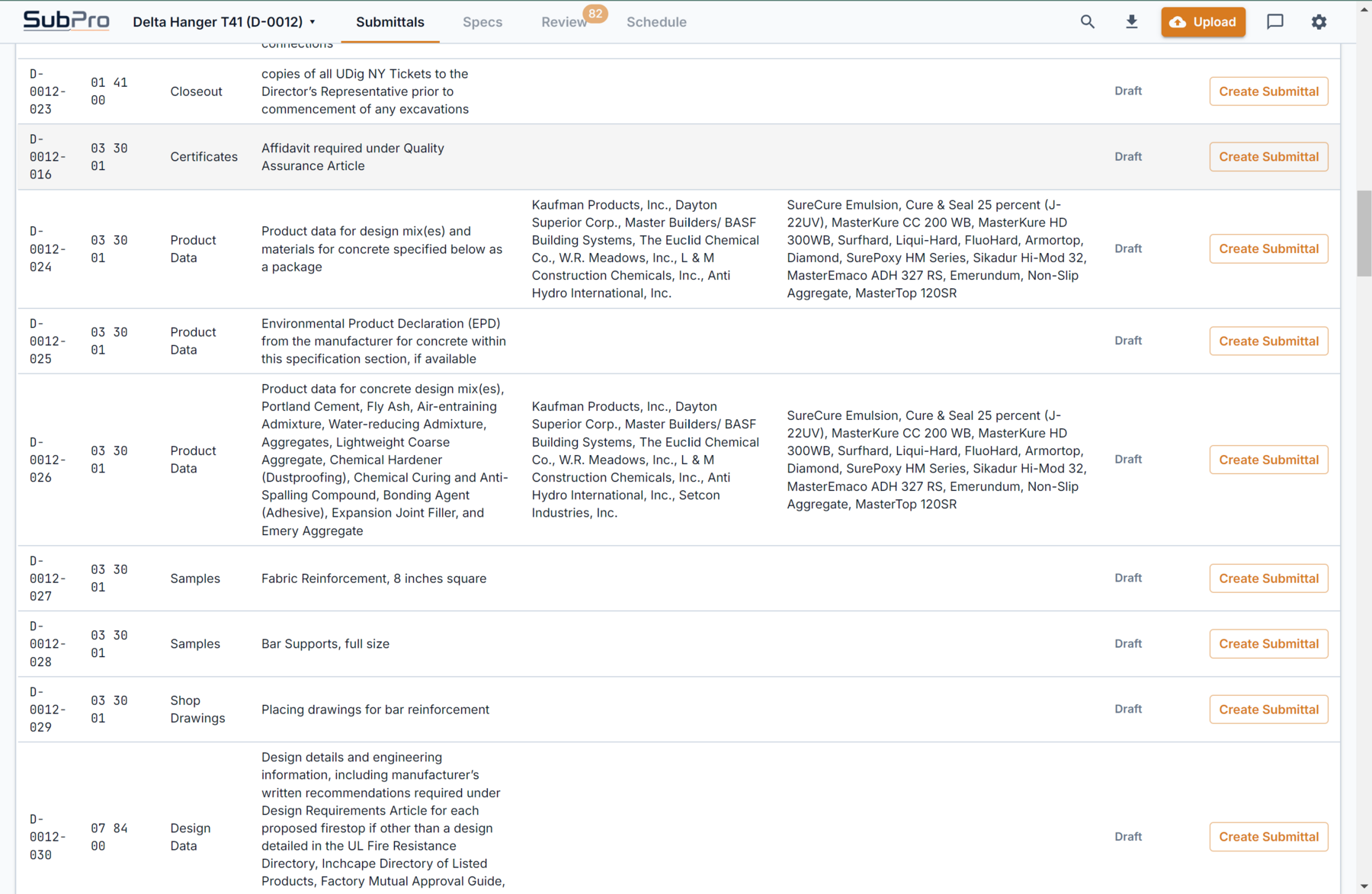
Section 32 31 13 Chain Link Fences and Gates gets ignored until the owner asks about fabric gauge in writing. The draft carries product data for fabric, framework, and gates, plus shop drawings for gate hardware. The galvanizing certificate rides in a reference standard, not the submittals list, so its row arrives flagged.

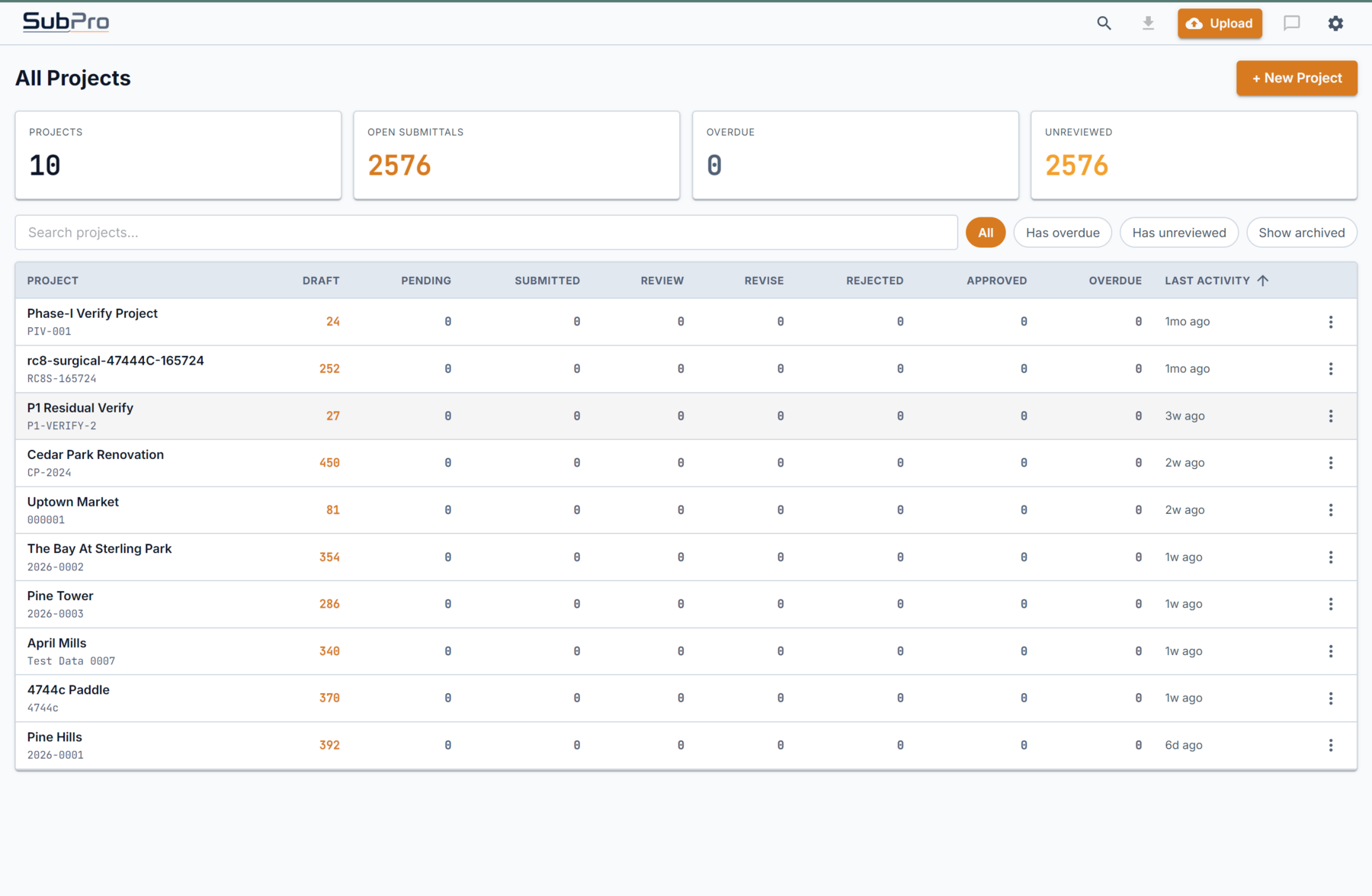
The log, the evidence, the sent record, and the spec book usually live in four places. In SubPro a project is one screen: rows, statuses, flagged decisions, matched documents, and the source page behind each. Checking the work is a glance.
No staged demo on a groomed sample. A short fit call, then a sample build on one of your real project manuals.
Software that reads a project manual will sometimes read one wrong. So rows cite pages, uncertain rows arrive flagged, and a person reviews before it becomes the log.
Most construction software manages submittals somebody already made. Making them is the product here, and the exports feed whatever portal the GC mandates.
It is read for your job, then deleted, with no training use. The data handling page spells out the mechanics.
Building the log used to be where tools like this clocked out. Here each submittal keeps its review status, its revision stack, and every dated transmittal through the closeout binder, and your copy stays home even when a GC requires a portal.
Software that manages the submittals a project manual requires. SubPro reads the spec book, drafts a cited log, gathers product data where the library has it, and keeps status, revisions, and transmittal history on every item to closeout.
A tracker manages submittals somebody else made. SubPro makes them, then tracks its own work. Teams under a GC mandate still export into the required portal, and they arrive with the work already done.
No. It prepares a reviewable first pass with spec-page references and review flags. A person on your team reads the draft and decides what is ready before anything is submitted. The review stays human.
Hand it a real project manual and read what comes back. Count the rows against the sections you know are in there, click from a row to its cited page, and check what it did with a substitution.
The lifecycle view: one record per submittal, spec page to closeout.
The log itself: columns, citations, and the cleanup pass.
Evidence in, one reviewable PDF per submittal out.
One fit call, one real project manual, and a drafted log with a finished submittal package to judge before any decision.